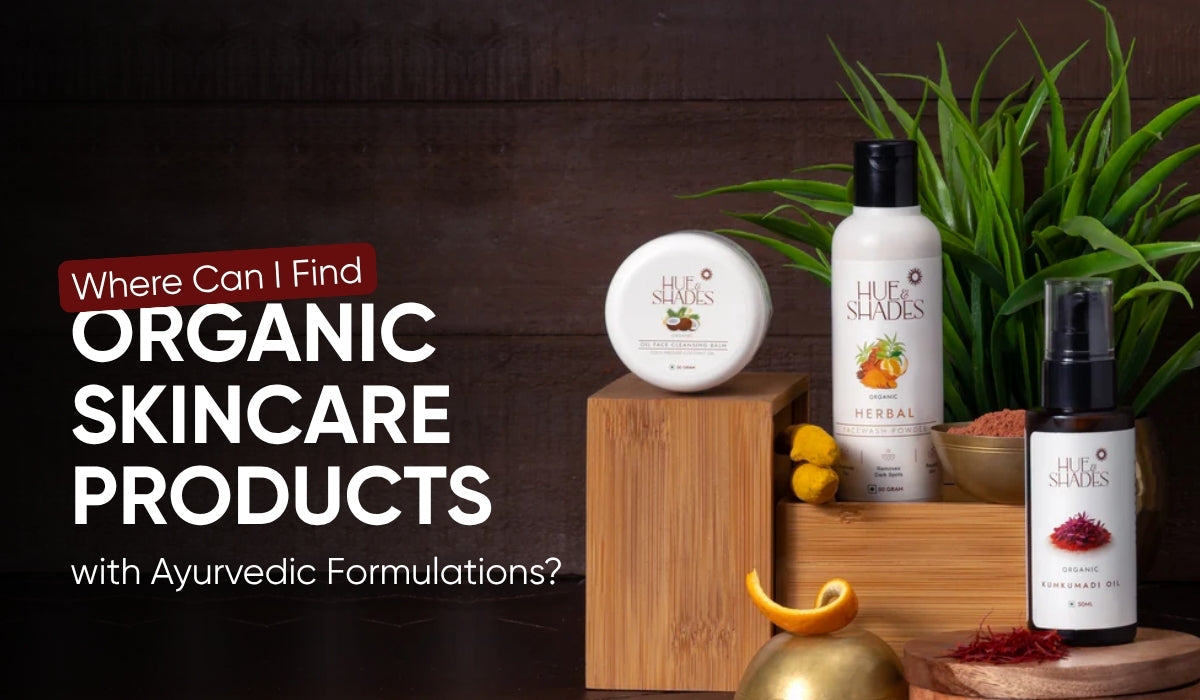
Are There Organic Skincare Products Suitable for Acne-Prone Skin?
Acne-prone skin demands a different kind of care—one rooted in restoration rather than restriction. While we often focus on the surface breakouts and redness, the root cause usually lies deeper: a damaged skin barrier, overactive oil production, or chronic irritation from harsh daily products. To truly calm your skin, you must first understand what it is trying to tell you.
Organic skincare has grown fast in India over the last few years, with more people moving away from synthetic actives toward plant-based formulas. But there is a misconception worth correcting early: not everything labelled "natural" or "organic" is automatically safe for acne-prone skin. Some plant oils and butters are just as likely to clog pores as synthetic ones.
This guide looks at what organic skincare actually does for acne-prone skin, which ingredients help, which ones can backfire even in a clean formula, and how to build a routine that works with your skin rather than against it.
What Is Organic Skincare?
Definition of Organic Skincare
Organic skincare refers to products formulated with ingredients grown without synthetic pesticides, fertilisers, or genetically modified inputs, and processed without harsh synthetic chemicals such as parabens or sulphates. The aim is to reduce the skin's exposure to synthetic residues while relying on plant-derived actives for cleansing and treatment.
Difference Between Organic, Natural, and Clean Beauty
These three terms get used interchangeably, but they mean different things.
- Organic refers specifically to how the raw ingredients were farmed and processed.
- Natural simply means an ingredient is derived from nature, with no claim about how it was farmed.
- Clean beauty is a broader, less regulated term that generally means a product avoids a defined list of ingredients considered harmful, regardless of whether those ingredients are synthetic or natural.
A product can be natural without being organic, and clean without being either.
Can Organic Skincare Help Acne-Prone Skin?
Yes, organic skincare can support acne-prone skin, but the benefit comes from how the formulas work, not just because they’re labeled “organic.”
Gentler ingredients
- Many organic products avoid harsh chemicals like strong detergents or synthetic fragrances that can irritate skin and worsen breakouts.
Balanced cleansing
- Organic cleansers are often mild and help maintain the skin’s natural pH, which is important because acne-prone skin already struggles with bacterial imbalance.
Barrier support
- A healthy skin barrier keeps irritants out. Organic formulas that focus on barrier care can reduce flare-ups and help skin recover faster.
Lower irritation risk
- With fewer synthetic dyes and fragrances, organic products may be less likely to trigger sensitivity, though this depends on the exact formula.
Ingredients to Look for in Organic Skincare for Acne
|
Ingredient |
Benefits for Acne-Prone Skin |
|---|---|
|
Aloe Vera |
Soothes inflammation and irritation. In a randomised controlled trial, aloe vera gel combined with tretinoin reduced inflammatory and non-inflammatory acne lesions significantly more than tretinoin alone (PubMed, 2013). |
|
Neem |
Traditionally used in Ayurveda for antibacterial and anti-inflammatory skin support. Evidence is mixed: a dermocosmetic review found supporting in vitro data for neem against acne-related bacteria (MDPI, 2022), while at least one independent study found leaf and bark extracts had insignificant anti-acne activity on their own, so results vary by formulation and concentration. |
|
Tea Tree Oil (properly diluted) |
Has the strongest clinical backing of the essential oils used in acne care. A randomised, double-blind, placebo-controlled trial found 5% topical tea tree oil gel effective for mild to moderate acne (PubMed, 2007). Effectiveness and tolerability depend heavily on concentration, covered below. |
|
Green Tea Extract |
Has the most consistent clinical evidence in this table. A systematic review and meta-analysis of five randomised controlled trials found green tea extract significantly reduced inflammatory acne lesion counts (PubMed, 2020). |
|
Witch Hazel |
Used traditionally as an astringent for oily skin. Laboratory research on witch hazel bark extract found it reduced inflammatory markers triggered by acne-causing bacteria in skin cell models, though the study authors note clinical evidence specifically for acne remains scarce (PMC, 2022), so this is supportive rather than conclusive. |
|
Turmeric |
Curcumin, turmeric's main active compound, is well documented for anti-inflammatory and antioxidant effects in skin care formulations, which is why it is used in Ayurvedic preparations for calming redness associated with acne. |
|
Ylang Ylang essential oil |
Traditionally used for its soothing and harmonizing qualities, Ylang Ylang essential oil supports natural skin balance and is often included in blends for delicate |
|
Jojoba Oil |
Structurally close to human sebum, which is why it is often used to help balance oil production without the heavier, more occlusive feel of other plant oils. |
|
Chamomile |
Commonly included for its calming effect on irritated skin, helpful for acne-prone skin that is also reactive or easily inflamed. |
Ingredients That May Trigger Acne Even in Organic Products
"Organic" describes how an ingredient was farmed and processed. It does not describe whether that ingredient is non-comedogenic, meaning unlikely to clog pores. Several plant-derived ingredients that are entirely organic are also well documented as comedogenic.
Ingredients flagged as comedogenic in dermatologwell-documentedical literature, including coconut oil, cocoa butter, and other heavy plant oils, are listed in consumer dermatology resources reviewed by medical professionals (Medical News Today). The comedogenicity data behind these lists comes from controlled rabbit-ear and human-model assays first developed in the 1980s, still the reference standard used to rate ingredients today.
- Coconut oil — frequently cited as one of the more comedogenic plant oils available.
- Cocoa butter — a heavy, occlusive butter that can sit on top of the skin and trap oil beneath it.
- Heavy plant oils generally — including some nut and seed oils that are excellent for dry skin but too rich for acne-prone skin.
- Artificial fragrance — a common irritant and trigger for breakouts in sensitive, acne-prone skin, organic or not.
- Wax-heavy formulations — can create an occlusive layer that traps sebum and bacteria against the skin.
A Note on Essential Oils
Essential oils like tea tree oil are backed by research when used properly. Studies show they’re generally safe, with only mild side effects at very high strengths. The acne benefits were seen at gentle levels around 5%.
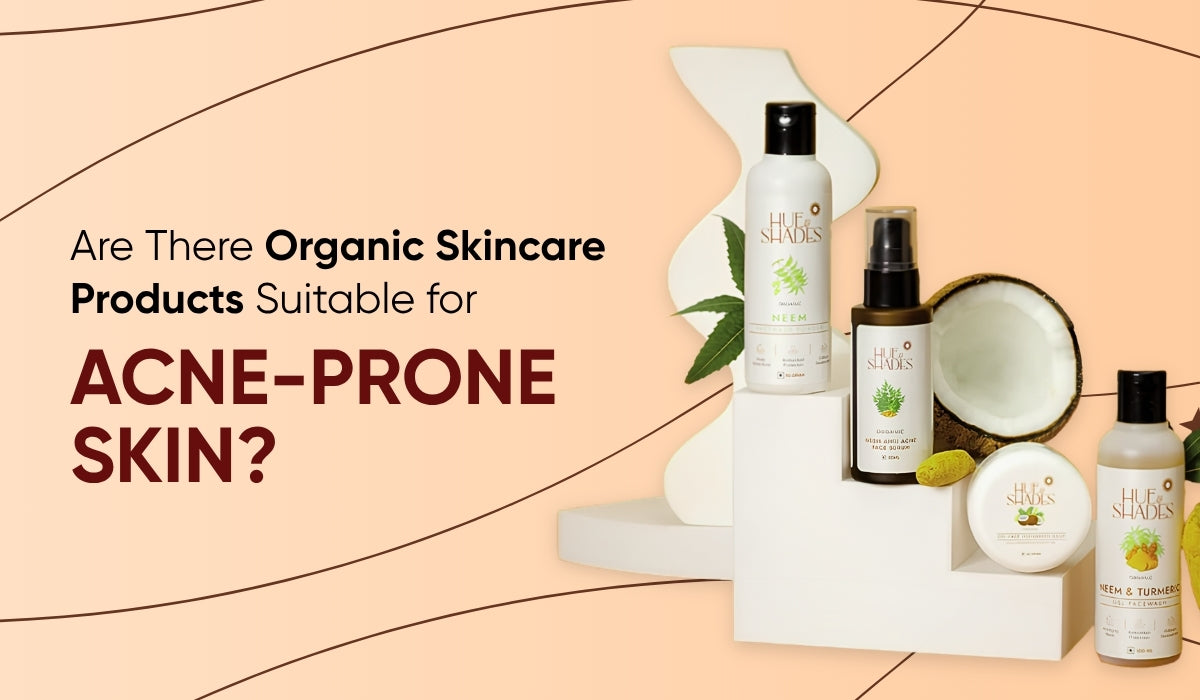
In other words, concentration is what determines whether an essential oil helps or irritates, not the fact that it is an essential oil. Hue and Shades' Neem & Turmeric Face Wash Gel includes tea tree essential oil formulated at cosmetic-use levels intended for daily cleansing rather than leave-on spot treatment, which is a meaningfully different exposure than applying concentrated oil directly to skin.
Benefits of Organic Skincare for Acne-Prone Skin
Gentle on Sensitive Skin
Formulas free from harsh sulphates and synthetic fragrance tend to be better tolerated by skin that is already inflamed or reactive from active breakouts.
Supports Skin Barrier
Plant oils and butters used in the right concentrations help replenish lipids that a damaged barrier has lost, which is part of why barrier repair is now considered central to acne management rather than separate from it.
Rich in Plant-Based Antioxidants
Ingredients like Ylang Ylang, Vitamin E and turmeric bring antioxidant compounds that target the inflammatory side of acne, not just the bacterial side.
Fewer Synthetic Irritants
Lower reliance on synthetic preservatives, dyes, and fragrance reduces one common source of contact irritation that can mimic or worsen acne symptoms.
Environmentally Friendly
Organic farming practices generally reduce pesticide runoff and support more sustainable sourcing, a separate but often valued benefit alongside the skin-specific ones.
How to Choose Organic Skincare for Acne-Prone Skin
- Look for non-comedogenic formulas rather than relying on the word organic alone.
- Check the full ingredient list, not just the headline actives on the front of the packaging.
- Avoid heavy oils if your skin runs oily, even if those oils are organic.
- Prefer fragrance-free or low-fragrance products, since fragrance is one of the most common irritants regardless of source.
- Buy from brands that are transparent about formulation.
Simple Organic Skincare Routine for Acne-Prone Skin
Morning
- Gentle organic cleanser — Neem Facewash Powder or Neem & Turmeric Face Wash Gel
- Acne-friendly serum — Neem Anti-Acne Serum
- Lightweight toner (optional)
- Moisturizer suited to your skin type
Evening
- Double Cleanser — Oil Face Cleansing Balm first if wearing makeup or sunscreen needing a deeper cleanse followed by facewash
- Treatment product — Neem Anti-Acne Serum
- Moisturizer
Weekly
- Clay mask, once or twice a week depending on oiliness
- Gentle exfoliation, if your skin tolerates it well
For a complete routine in one step, the Anti Acne (AM-PM) Combo bundles the cleanser, serum, and cleansing balm together.
Common Mistakes to Avoid
- Using too many active products at once, which makes it hard to identify what is helping or irritating.
- Skipping moisturizer because skin feels oily, which often backfires by triggering more oil production.
- Over-cleansing, which strips the skin barrier and can make acne worse rather than better.
- Frequently changing products before giving any single routine enough time to show results.
- Ignoring sunscreen, especially when using actives that increase sun sensitivity.
Who Should Consider Organic Skincare?
Suitable for: mild acne, sensitive skin, combination skin, teenagers, adults with occasional breakouts, and people who specifically want a gentler, plant-based approach to their routine.
Conclusion
Organic skincare can be an excellent option for acne-prone skin when products are chosen carefully, with attention to ingredient quality and concentration rather than the organic label alone. Focus on non-comedogenic formulations and a consistent routine over time, since most of the research behind these ingredients shows results building over weeks rather than days. Organic products work best as part of a balanced skincare regimen, supporting the skin barrier and calming inflammation, rather than functioning as a standalone treatment for acne.